


We are building
Flying Cars.
Introducing the world's first Humming Propulsion System that's changing the future of aviation. Silent. Efficient. Revolutionary.
Founder's Vision

AHMED HAMZA
Founder & Chief Innovation Officer
"Ahmed Hamza is an aerospace engineer, former military R&D officer, and the visionary founder of HPS Aviation. With over a decade of experience in missile mechanics and propulsion systems at the Egyptian Armed Forces Research Center, Ahmed specialized in developing high-performance propulsion technologies under extreme precision and operational demands."
In 2014, inspired by the flight of hummingbirds, he began exploring a new concept for aerial propulsion — one that would break the limitations of current eVTOL technologies. After years of intensive research, prototyping, and simulation using tools like MATLAB, ANSYS, and CFD, he created the Humming Propulsion System (HPS) — a compact, efficient, and tilt-free propulsion technology capable of revolutionizing how we fly.
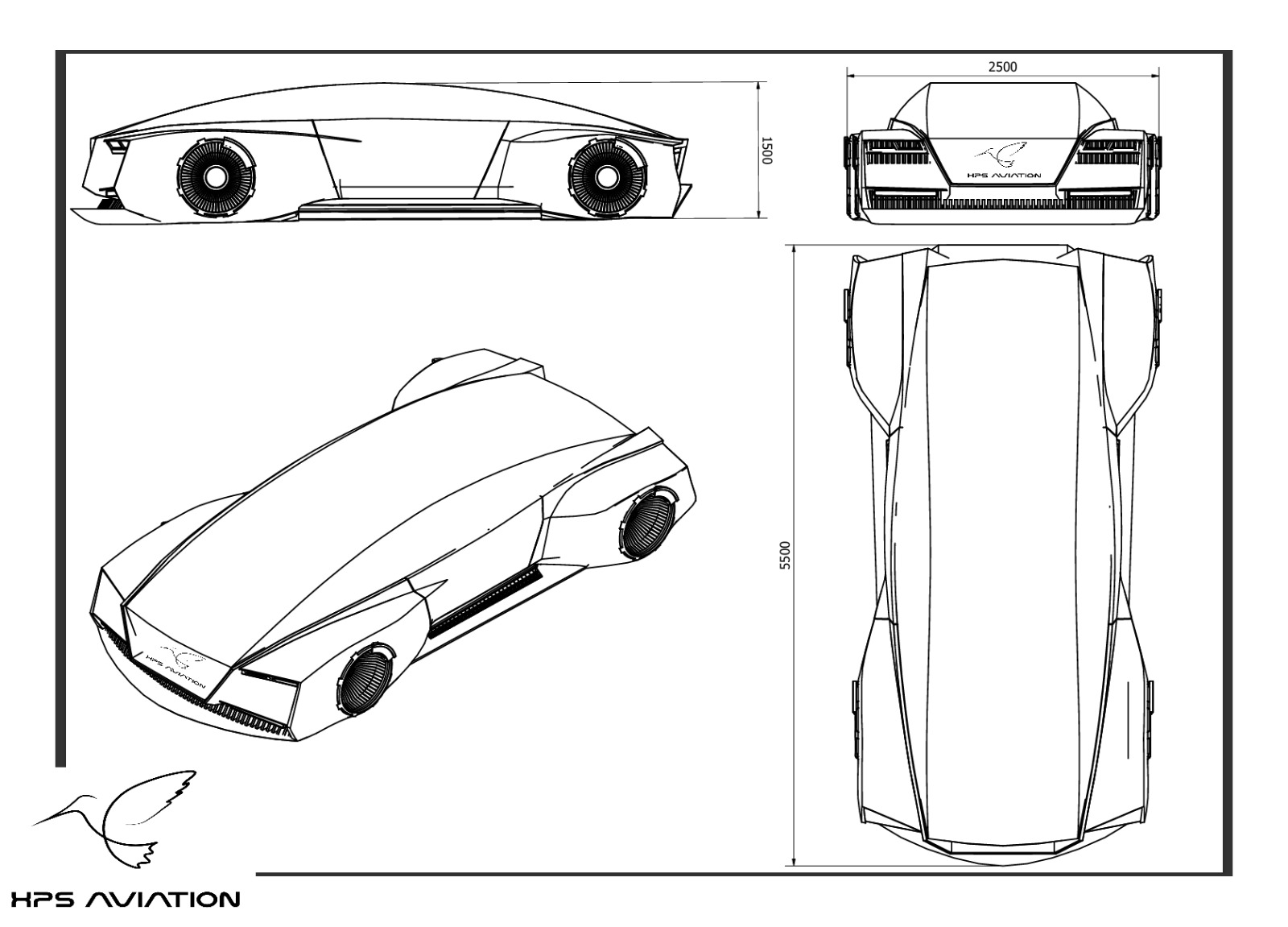
Today, Ahmed leads HPS Aviation from Malaysia Global Market, building not only the propulsion system of the future, but also its first product: CROW, a hydrogen-powered flying car that makes the dream of true personal air mobility a reality.
The Problem
Traditional aircraft propulsion systems face critical limitations that have remained largely unchanged for decades.
Inefficiency
Traditional propeller-based propulsion systems waste energy and create excessive drag. This results in high operating costs and limited range — unsuitable for practical daily use.
Noise Pollution
Rotor noise is often above 90 dB, making it disruptive for urban environments and unacceptable for mass deployment.
Requires Skilled Pilots
Most air mobility vehicles still require pilot licenses and complex training, limiting public adoption.
Low Payload & Short Range
Many eVTOLs can only fly short distances and carry 2 passengers — not viable for families or cargo.
Infrastructure Dependency
Current eVTOLs need vertiports, runways, or custom landing infrastructure, which increases cost and delays scalability.
Lack of True Flying Car Experience
Most eVTOLs resemble drones or mini-helicopters — not the flying car we've all dreamed of. The market still lacks a vehicle that feels like a car but flies like a jet.
The Innovation
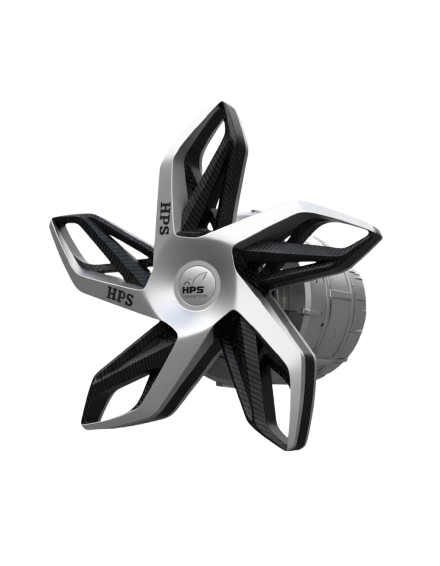
Introducing the Humming Propulsion System (HPS) – a revolutionary approach to flight.
How It Works
Dual-Motion Mechanism
Combines rotational motion (from axial flux electric motors) with a controlled oscillating (flapping) motion. This allows each propulsion unit to adjust angle of attack at every degree of rotation.
Inspired by Nature
Mimics the hummingbird's unique flight mechanics — the only bird capable of sustained hovering and omnidirectional movement — using engineered precision.
No Tilt Required
Unlike traditional multirotors, HPS doesn't need to tilt the entire aircraft to change direction. This enables smoother, safer, and more intuitive flight.
Key Advantages
-
Ultra-Quiet Operation
Operates at ~65 dB — quieter than a normal conversation.
-
High Efficiency
Up to 85% propulsion efficiency, reducing energy consumption.
-
Compact & Scalable
Modular design allows scaling from drones to full-size aircraft.
-
Stable Hover
Maintains stable hover without complex tilt mechanisms.
CROW Aircraft
The world's first hydrogen-powered flying car designed for everyone.
Applications
Urban Air Mobility
Skip traffic and commute in minutes instead of hours.
Emergency Response
Rapid deployment for medical emergencies and disaster relief.
Personal Transportation
The ultimate personal vehicle for families and individuals.
Technical Specifications
Maximum Speed
250 km/h
Range
500 km
Passengers
4 Adults
Power Source
Hydrogen Fuel Cells
Maximum Payload
450 kg
Noise Level
65 dB
Pilot License
None Required
Takeoff/Landing
Vertical (VTOL)
Invest With Us
Join our mission to revolutionize urban air mobility. Explore investment opportunities and resources.
Connect With Us
Get in touch with us for partnerships, career opportunities, or general inquiries.